The honest answer to “when is the Best Time to visit the Serengeti?” is a question back: what do you actually want from the trip?
Because the park doesn’t have a good season and a bad season. It has different seasons that suit different travelers, and the standard advice, “come in July or August,” only applies to some of them. So, no single time is best for visiting the Serengeti.
There are five distinct seasons, each one excellent for something and compromised on something else, and the right one depends entirely on what you want out of the trip. So the useful question is not when the Serengeti is best. It is: what do you most want to see, and what are you willing to trade for it? Here is what each part of the year actually delivers.
June to October: the Dry season
Best for: first-time visitors, Mara River crossings, straightforward conditions
Costs you: the highest rates of the year and the busiest roads
This is peak season, and the reasons are practical rather than fashionable.
Rain is minimal, so tracks stay firm, and nothing gets canceled. Grass is short and thinning, which means animals are visible rather than concealed. Most importantly, seasonal water dries up and wildlife concentrates around the rivers and permanent waterholes, so predators and prey are drawn into predictable, findable areas. For a first safari, when you want a reasonable guarantee of seeing a great deal in a short time, these conditions are hard to beat.
Weather is comfortable but has a range. Morning game drives are genuinely cold, cold enough that a fleece and a blanket are welcome, while midday sits warm and dry. Evenings cool quickly after sunset.
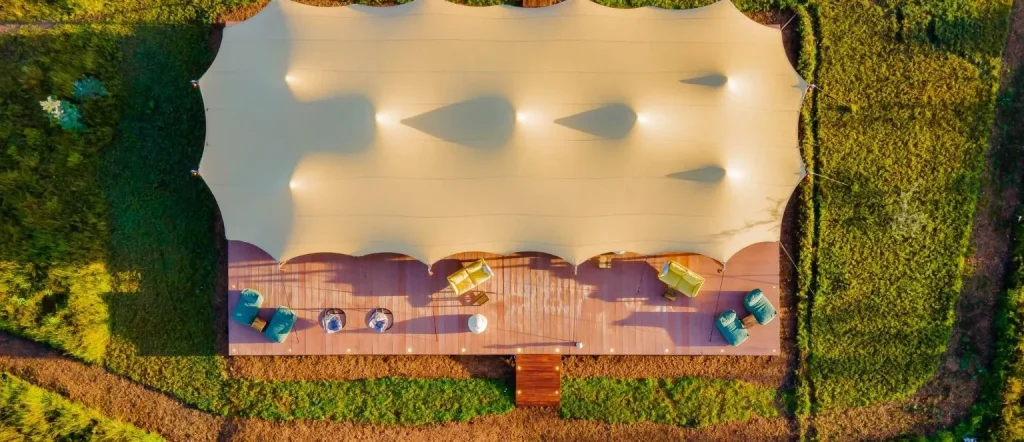
This is also when the herds are in the northern Serengeti and the Mara River crossings take place, roughly July through October. If a crossing is the specific thing you have traveled for, one factor outweighs every other: being based in the north rather than driving up to it for the day. That’s why Tamu Tamu Kogatende sits where it does, close to the river, so guests are already in position when the herds begin gathering on the bank.
The honest trade-off is real. Popular sightings on the central circuit can attract a line of vehicles. Rates peak across the board. Good camps book out six to twelve months ahead, and the best ones in the north book out even earlier. If you are considering this window, book far sooner than feels necessary.
January to March: Calving Season on the Southern Plains
Strongest for: predator activity, photography, dramatic natural behavior
Costs you: nothing much, provided you are based in the right part of the park.
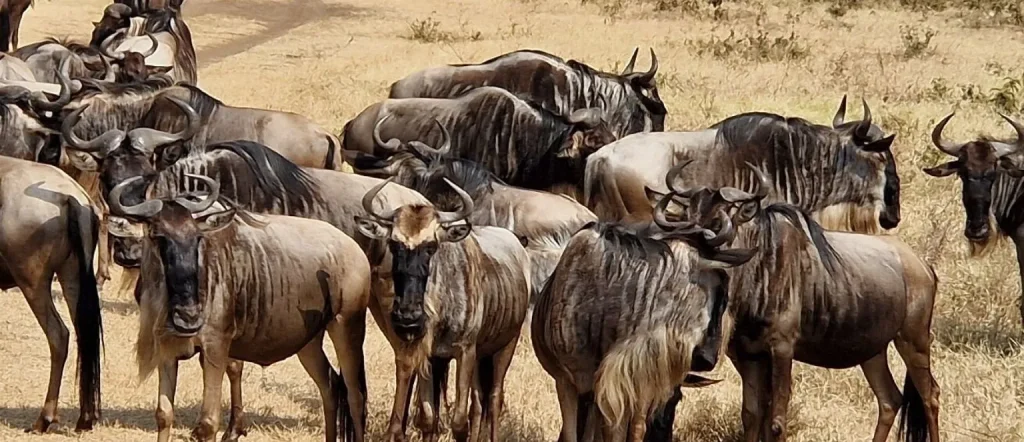
A short dry spell falls between the short and long rains, and the herds settle onto the mineral-rich short grass plains of the southern Serengeti and Ndutu to give birth. Roughly half a million calves arrive within two to three weeks, usually peaking in February, with thousands born on a single morning at the height of it.
If you want to understand how the ecosystem actually functions rather than simply tick off species, this is the time to come. Predators gather in response. Lions, cheetahs, spotted hyenas, and jackals all converge on the plains, and because the ground is flat and open, you can watch a hunt develop from the first crouch to the outcome instead of losing it in scrub.
It is quieter than July to September, generally cheaper, and the landscape is green with the Ngorongoro highlands standing on the horizon. The only real requirement is being based in the south, because the herds will not be anywhere near the north or the central circuit.
One thing to know: the exact calving ground shifts each year depending on where the short rains fell. Good guiding on the day matters more than any long-range prediction.
April and May: The Long Rains, The Green Season
Best for: value, solitude, photography, returning visitors
Costs you: some rain, longer grass, and a reduced choice of open camps
These are the quietest months in the park, and for a certain kind of traveler they are the best.
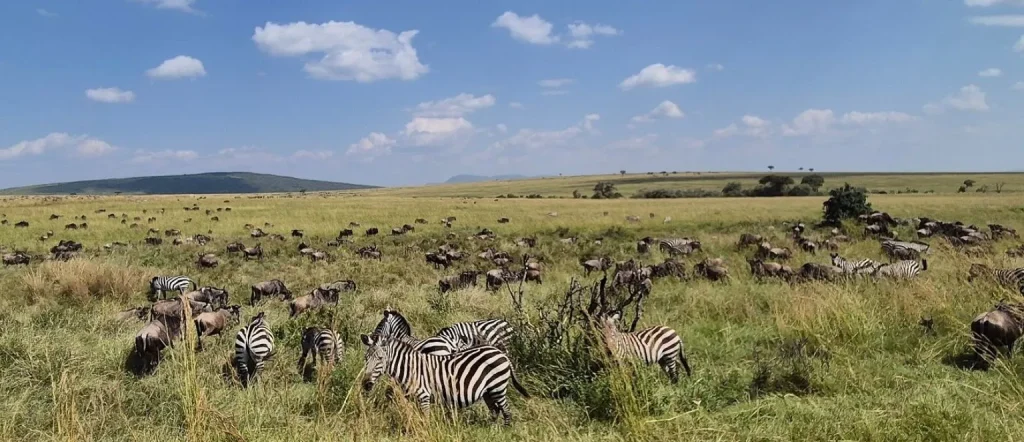
The Serengeti in May is green in a way it simply never is in August. Skies build enormous and dramatic in the afternoons. Birdlife peaks, with resident species in breeding plumage and migrants present. You can drive for long stretches without meeting another vehicle, and a good sighting is often yours alone for as long as you want it.
The rain deters more people than it should. It usually arrives as an intense downpour that clears within an hour or two, not the all-day grey drizzle that the phrase suggests. Mornings are frequently clear. Drives run as normal.
Rates are at their lowest of the year. If your budget is fixed, April and May buy you either a considerably better camp or several additional nights for the same money as August, and extra nights almost always improve what you see.
The right base is the central Serengeti, because resident wildlife does not migrate. The lion prides, leopards, cheetahs, elephants, and buffalo of the central plains are there in May exactly as they are in peak season. Tamu Tamu Serengeti Camp sits in that resident wildlife heartland, around 45 minutes from Seronera, close enough to reach the central circuit early but outside the busiest cluster of camps.
The honest downsides: grass is longer, which makes smaller animals harder to spot and puts more weight on your guide’s ability. Water is everywhere, so wildlife disperses rather than concentrating. Some camps also close for the long rains.
November and Early December: the Short Rains
Best for: shoulder season value with plenty of movement
Costs you: less predictable weather
The short rains arrive, the herds turn south through the eastern Serengeti, and the park greens up again. Visitor numbers drop sharply, rates sit well below peak, and the landscape is active rather than settled.
November is one of the most underrated months on the calendar. You get much of the green season’s quiet and value, with herds visibly on the move. From mid-December onward, demand and pricing begin climbing again toward the festive period.
Choosing your Month
Here is a summary of which part of the Serengeti you should be in during which month for experiencing a particular part of the migration.
| If this matters most | Travel | Base yourself |
| Mara River crossings | July to October | Northern Serengeti |
| Newborn calves and predators | January to March | Southern Serengeti, Ndutu |
| Lowest prices, empty roads | April, May, November | Central Serengeti |
| Easy conditions for a first safari | June to October | Central and northern Serengeti |
| Photography light and colour | April, May, November | Central Serengeti |
| Fewest vehicles at sightings | April and May | Central Serengeti |
| Birding | November to April | Anywhere in the park |
Two things that matter more than the Month
Region beats season. Being in the right part of the park for the time of year matters more than the time of year itself. A well-planned April trip in the central Serengeti will consistently outperform a badly planned August trip in the wrong region. The most common and most expensive planning error is booking peak season and then staying six hours’ drive from where the herds actually are.
Nights beat itinerary length. Three nights in one region reliably produces better sightings than one night in each of three regions. Transfers consume game viewing hours, unsettle your rhythm, and push you onto the most efficient and therefore busiest routes. Fewer places, longer stays.
How Our Camps Fit the Calendar
Olerai Lodge, Arusha. 10 minutes from Arusha Airport and about an hour from Kilimanjaro International Airport. Gardens, coffee plants, a pool, and Mount Meru on the horizon, which makes it a sensible first night after a long flight and an easy last night before one. Relevant in every season, because every safari begins and ends somewhere.
Tamu Tamu Serengeti Camp. Central and Ikoma Serengeti, roughly 45 minutes from Seronera. Ten tents on raised platforms with private verandas and en suite bathrooms. Its strength is year-round consistency, since the resident wildlife of the central plains stays put, whatever the herds are doing.
Tamu Tamu Kogatende. Northern Serengeti, close to the Mara River. The base for crossing season between July and October, and one of the quietest corners of the park for the rest of the year.