There is a version of the Serengeti most visitors never see. It is greener than the photographs suggest. Storm clouds pile up along the horizon through the afternoon, and the light turns the kind of gold that photographers wait years for. And when you stop at a sighting, a leopard draped along a sausage tree branch or a cheetah with cubs on an open rise, you are often the only vehicle there.
That is the green season. April, May and November. Officially, these are the low months. Practically, they remain one of the best-kept secrets in East African Safari, and for a certain kind of traveler they produce a far better safari than the peak.
What “low season” actually means here
Simply, the low season means rain. It does not mean a washout, and the distinction matters because the phrase deters far more people than it should.
Serengeti rain typically arrives as a heavy afternoon downpour that clears within an hour or two, rather than the persistent grey drizzle most European or North American travelers picture when they hear “rainy season”.
Mornings are frequently bright. Game drives run to their normal schedule. Over the course of a week you may get properly wet once or twice, and the light that follows a storm is usually worth the inconvenience.
The long rains fall roughly through April and May. The short rains arrive around November. Neither closes the park, and neither stops the wildlife from behaving as it always does.
What you Gain
The positives for going on a Safari in Tanzania in the low or green season are:
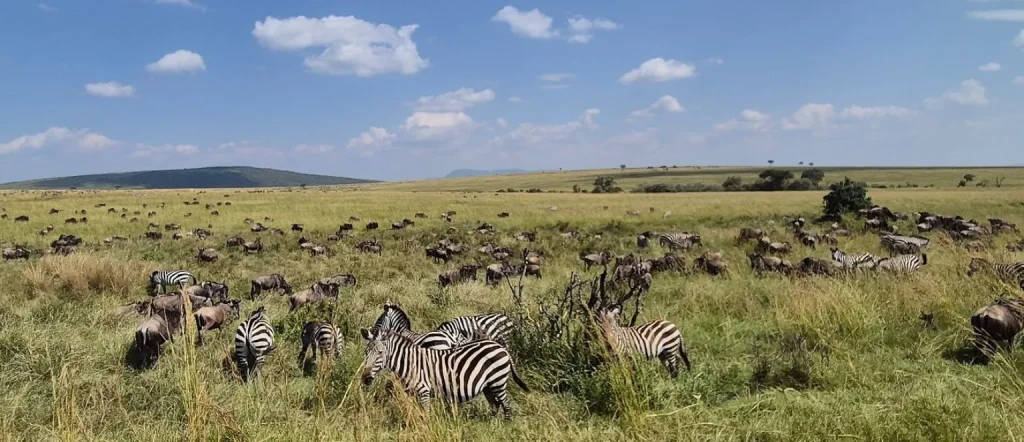
Space – This is the headline benefit, and it changes everything else. In peak season, a good leopard sighting on the central circuit can gather a queue of vehicles within minutes. In May you may sit with that same leopard alone for twenty minutes, watching it shift position, yawn, and eventually come down the trunk. That difference alters the entire texture of the experience. It stops feeling like a tour and starts feeling like a wilderness you happen to be standing in.
Landscape – The August Serengeti is beautiful in a spare, bleached, dust and bone way, and there is nothing wrong with it. The May Serengeti is lush and layered. Grass runs green and deep. Wildflowers appear across the plains. Seasonal rivers actually flow. Granite kopjes stand out sharply against color instead of dissolving into beige.
Light – Ask wildlife photographers which season they prefer, and most will say green without hesitating. Dramatic cloud formations filtered rather than flat sunlight, saturated color, and none of the white midday haze that flattens dry season images.
Birds – Resident species move into breeding plumage and Eurasian migrants are present in numbers. The Serengeti records over 500 bird species across the year, and this is the window in which you will encounter the widest range of them. Even travellers who arrived indifferent to birds tend to leave with a list.
Newborns – Many resident species time their births to the rains, when grazing is abundant. Green season therefore means young animals across the board, not just wildebeest calves in the south. Impala, warthog, giraffe and antelope young are all common sights.
Value – The most concrete gain of all. Low season rates sit substantially below peak, and that arithmetic works in your favour two ways. The same budget buys either a noticeably better camp than you could otherwise justify, or several additional nights. Most travellers underestimate how much a fourth or fifth night improves what they actually see, because wildlife rewards patience more than it rewards itinerary length.
What you Give Up
An honest case includes the trade-offs, and there are real ones.
- Grass is longer. Smaller animals are harder to spot, and so are cats lying flat. This puts considerably more weight on your guide’s ability to read tracks, alarm calls, and movement, which is why guiding quality matters more in green season than in any other month.
- Wildlife disperses. With water available everywhere, animals are not forced to concentrate around a handful of permanent sources. Sightings take more driving and more patience.
- Roads soften. Some tracks become slow-going, and occasional detours are necessary. This is a matter for your guide rather than for you, but it can reshape a day.
- Some camps close for the long rains, which narrows your choices. The ones that stay open tend to be those confident in their year round locations.
- The herds are not crossing rivers. Through April and May they are moving northwest across the central Serengeti. In November they are heading south. Neither is crossing season. If the Mara River is your non-negotiable, travel between July and October instead.
Where to base yourself
The central Serengeti is the right answer for most green season trips, for one straightforward reason. Resident wildlife does not migrate. The lion prides, leopards, cheetahs, elephants, buffalo, hippos, and giraffes of the central plains are exactly where they were in August. The migration is a spectacle laid over an ecosystem that stands perfectly well on its own.
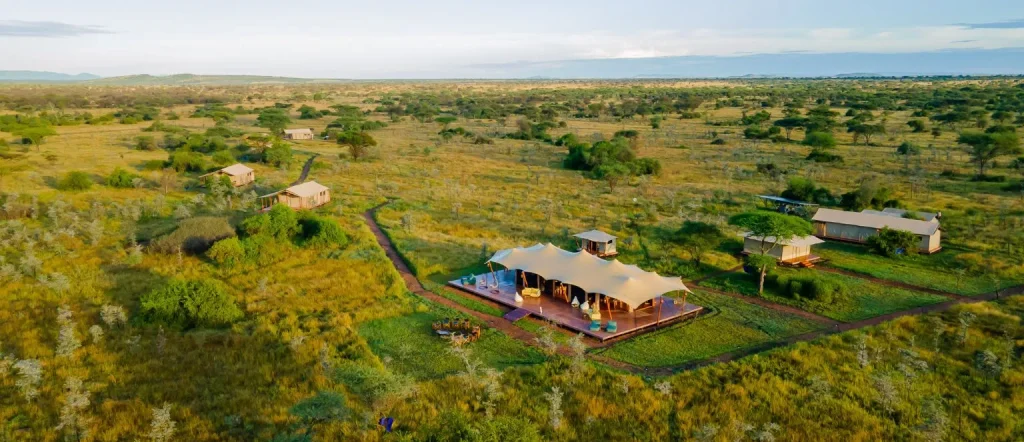
Tamu Tamu Serengeti Camp sits around 45 minutes from Seronera, inside that resident wildlife country but outside the busiest cluster of camps. In green season that separation compounds. A quiet area in a quiet month gets you close to having a corner of the Serengeti to yourself, particularly in the first hour after sunrise. The camp has ten tents on raised platforms, each with a private veranda, an en suite bathroom with indoor and outdoor showers, and a fire in the evening that feels genuinely welcome after a cool, damp drive.
Pair it with a night at Olerai Lodge in Arusha at either end of the trip. The green season is when the gardens there are at their best, with the birdlife loud, the coffee plants full, and Mount Meru appearing and disappearing through cloud across the course of a day.
Who the Green Season Suits
It is the best fit for repeat safari goers who have already covered the classic circuit, photographers chasing light and clean backgrounds, birders, couples who want quiet more than they want checklists, and travellers working within a defined budget who would rather have five good nights than three expensive ones.
It is a weaker fit for anyone whose single priority is watching wildebeest cross the Mara River, and for travellers genuinely unwilling to get rained on at any point.
One Last Thought
The busiest months are busy partly because of a self-reinforcing loop. Guidebooks recommend July, so people book July, so July fills, so guidebooks keep recommending July. The advice is not wrong. It is simply not the only answer, and it is increasingly not the most interesting one.
If your idea of a safari involves silence, space and a landscape that looks alive rather than merely survived, consider coming when nobody else is coming.